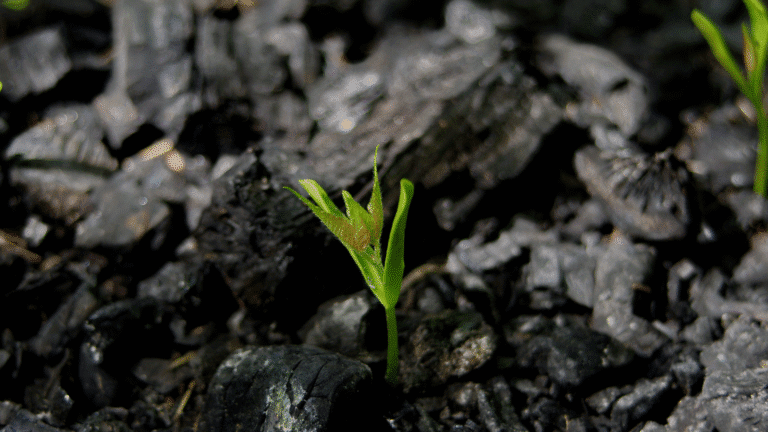
Why Women’s Stories Matter: Now More Than Ever
Your story is not a luxury. It isn’t something to save for when life slows down. In this moment, when so many voices are questioned or silenced, your story is both resistance and self-preservation. Speaking it aloud is a way of saying: I am here. I matter. I will not be erased.
The Urgent Reality: Erosion and Uncertainty
In the United States, many women and those who belong in woman-centered spaces can feel the ground shifting beneath them. What once felt at least somewhat stable now feels fragile. That unease is not imagined. It is a reasonable response to the cultural and legal conditions many of us are living through.
For women carrying multiple marginalized identities, that instability is often even more pronounced. It is not abstract. It reaches into the body, into daily life, into the question of whether your reality will be recognized or denied.
The Erosion of Autonomy
One of the clearest symbols of this erosion was the 2022 overturning of Roe v. Wade in the United States. This was more than a legal decision. It established a chilling precedent: rights that seemed settled can be revoked.
The result is a fractured landscape in which access to essential reproductive care depends on geography rather than need, health, or choice. The message is unmistakable. Authority over women’s bodies remains conditional.
When legal systems communicate that a woman’s body is a matter of public control, it changes how she relates to her future, her health, and her own authorship of her life.
As a Canadian living in the United States, I feel this from two directions at once: the shock of watching rights actively stripped away here, and the knowledge that such shifts never stay neatly contained within one border.
The Targeted Invalidation of LGBTQIA+ People
At the same time, we are witnessing escalating legislation and rhetoric aimed specifically at the LGBTQIA+ community, especially trans women and gender-diverse people who belong in woman-centered spaces. Efforts to limit gender-affirming care, exclude people from public life, or deny their basic legitimacy are not isolated events. They are part of a wider project of control.
These are not separate struggles. When one group’s lived truth is treated as negotiable, every woman’s story becomes more vulnerable to scrutiny, dismissal, and erasure. The attempt to invalidate trans lives is part of a larger effort to police bodies, identities, and belonging.
The Silencing Online
Beyond legislation, this battle is being fought in the digital spaces where so many people now live in public. Social media has become, for many women, a site of exhaustion, harassment, distortion, and surveillance.
For women speaking on politics, health, parenting, identity, trauma, or autonomy, the response can be immediate and vicious. Abuse, threats, and exposure do not merely wound in the moment. They teach self-censorship. They condition retreat. They make silence feel safer than honesty.
And when enough women decide that speaking is too dangerous, a culture begins to lose the record of what is actually happening.
The Historical Cost of Silence
This silencing is not new. It belongs to a much longer history of dismissing, pathologizing, or containing women’s experience.
In the nineteenth century, “hysteria” became a catch-all diagnosis for women whose emotions or expressions exceeded what society considered acceptable. Distress was medicalized. Discontent was reframed as disorder. Pain became suspect if it came from the wrong body.
Its legacy is still with us. We see it in medical gaslighting, in delayed diagnoses, in the routine minimizing of women’s pain, and in the way trauma is still so often recast as oversensitivity, instability, or personal failure.
When women cannot name their reality, the harm does not disappear. It moves inward. It becomes stress, exhaustion, anxiety, confusion, and isolation. Silence is not neutral. It protects systems that would rather not reckon with what women know.
Story as Proof
A story is not a statistic. It is evidence of a life lived.
Statistics matter, but lived truth carries something numbers alone cannot. It resists abstraction. It insists on human reality.
The force of movements like #MeToo came not from policy language first, but from women saying, again and again, this happened to me. The accumulation of story made denial harder. It created a body of truth too large to dismiss as isolated or imagined.
This is one reason stories matter now more than ever. They remain one of the clearest ways people insist on reality in a culture invested in distortion.
Story as Solidarity
Stories also interrupt isolation.
When one woman names something difficult and another recognizes herself in it, something shifts. Not because the pain disappears, but because it is no longer being carried alone.
Recognition is not everything, but it is not nothing. It reminds us that private struggle is often not private at all. It is patterned. Shared. Structural. Human.
Story as Self-Reclamation
To shape experience into story is also to reclaim authorship.
Something that once felt chaotic, unspeakable, or formless begins to take shape. It moves from being only something that happened to becoming something witnessed, named, and held. That does not solve suffering. But it does alter its place in the life of the person carrying it.
Story allows memory to become record.
Why Recollections Within Exists
This is part of why Recollections Within exists.
Not to add more noise. Not to ask women to perform themselves for attention. Not to flatten lived experience into content.
It exists to help preserve women’s stories and art as cultural record, especially in a time when so much is under pressure to disappear, be softened, or be denied.
I do not believe every story is safe everywhere. I also do not believe women’s lives should vanish simply because public platforms reward speed, cruelty, and spectacle over truth.
Recollections Within is my response to that reality. It is an effort to create something slower, more intentional, and more durable. A place where women’s lives can be documented with depth, reverence, and meaning, and preserved as record.
Your Story Still Matters
Whatever your story holds, it is not too small, too late, too messy, or too ordinary to matter.
In a time that encourages silence, telling the truth of your life can be an act of preservation.
That is part of what The Vulnerable Work of Remembering is for. It is a beginning place. A guided way of turning toward memory, identity, and the experiences that shape a life over time.
Download the free journaling guide below, and you’ll also receive occasional updates from Recollections Within as the archive grows.


Continue the Conversation
Read about how Recollections Within Came into being in the foundational series From Unravelling to Weaving.